
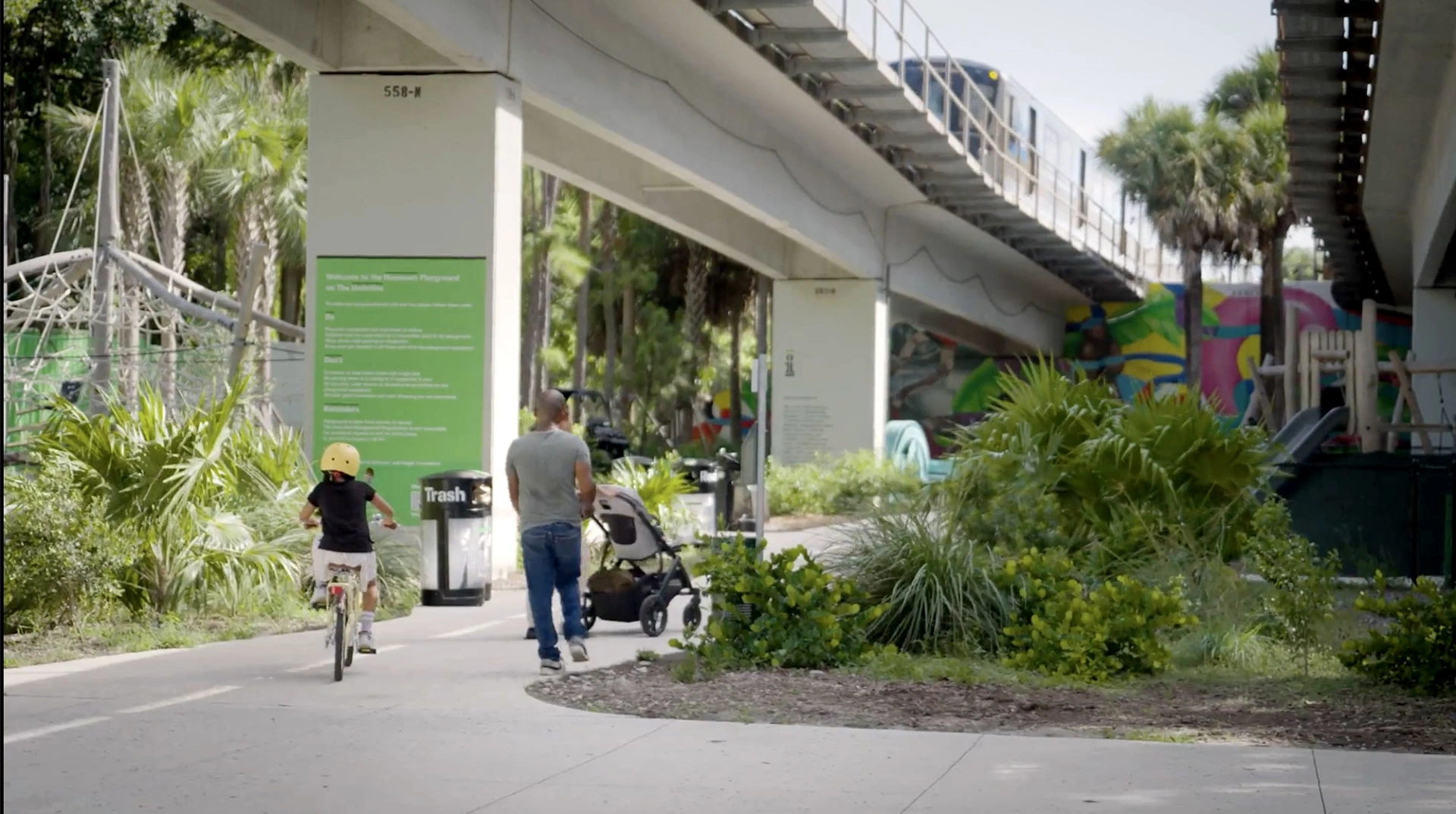
Much of modern Miami has been built around the automobile. As development spread outward after World War II, suburban neighborhoods and single-family zoning became the dominant pattern, making driving the primary way people move through the city. Today, many residents spend significant portions of their day commuting between home, work, and daily activities. Research increasingly shows that this car-dependent lifestyle can carry health consequences—longer sedentary periods, reduced physical activity, and fewer opportunities for everyday social interaction. By contrast, studies consistently find that walkable, mixed-use neighborhoods encourage daily movement, stronger community ties, and improved overall well-being.
This episode explores the growing interest in urban environments where housing, jobs, shops, parks, and public spaces exist in closer proximity. Districts like Wynwood illustrate how density and mixed-use development can create active streets and reduce reliance on constant driving, while cities around the world demonstrate how thoughtful urban design supports healthier lifestyles. Parks and shared public spaces play a central role in this model, providing places for recreation, gathering, and connection to nature. As Miami continues to grow, the episode argues that the city must expand beyond the traditional single-family mindset and begin designing neighborhoods that prioritize walkability, public space, and a healthier relationship between people and the city.